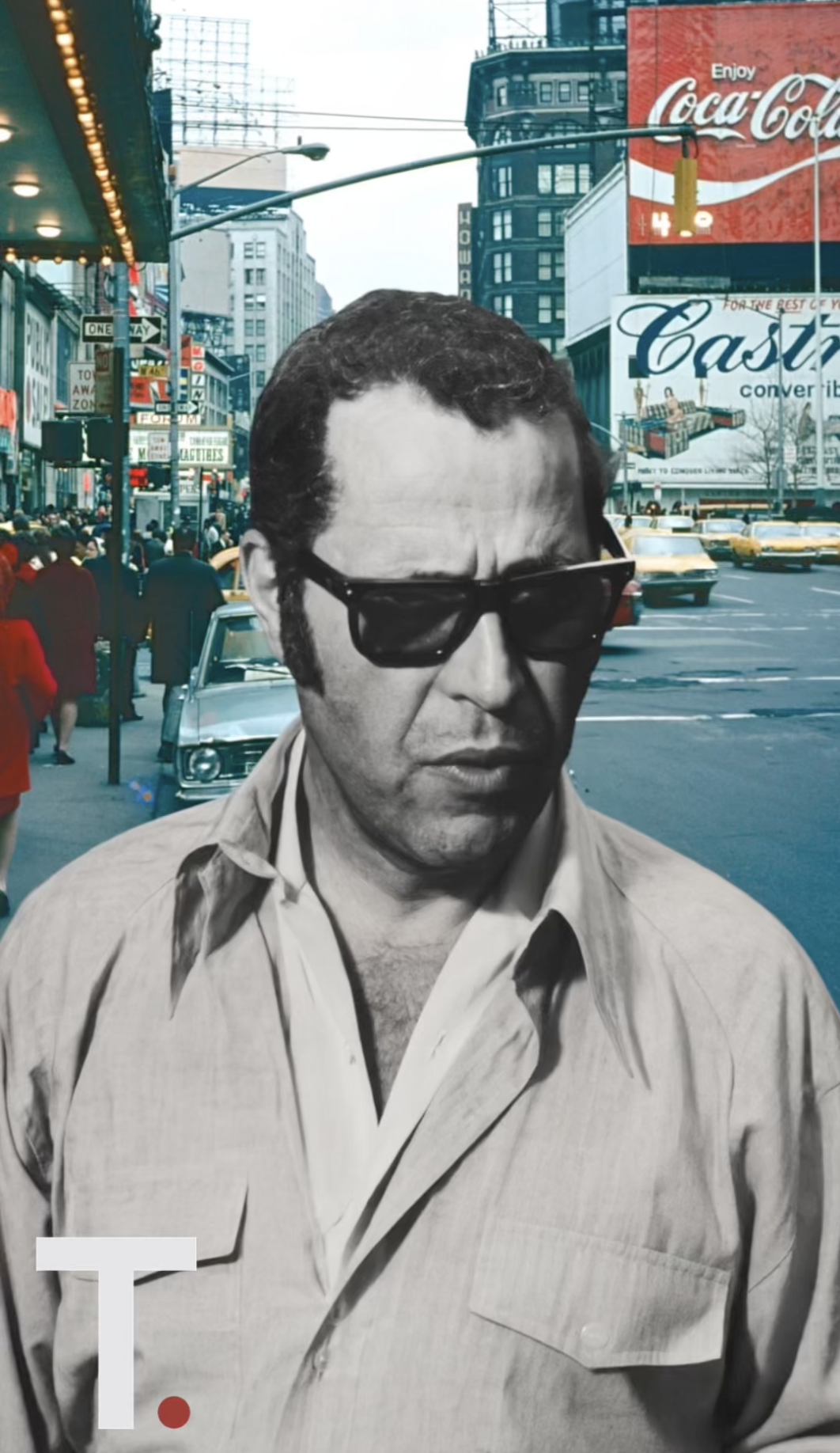
Ferit Tüzün
Ferit Tüzün was one of the important second-generation composers of the Turkish Republic. Born in Istanbul in 1929, he studied at the Ankara State Conservatory, where his teachers included Ulvi Cemal Erkin for piano and Necil Kâzım Akses for composition, two major figures in Turkey’s early Republican music history.
In 1954, Tüzün went to Germany on a Ministry of Education scholarship to study conducting at the Munich Academy of Music. While in Germany, he also continued his work as a composer and received support from major European musical figures including Carl Orff and Karl Amadeus Hartmann.
After returning to Turkey, Tüzün worked at the Ankara State Opera, first as assistant conductor and later as conductor. Shortly before his sudden death in 1977, at only 48 years old, he became general director of the same institution.
Although he left behind a relatively small body of work, Tüzün’s music is known for its vivid orchestral color, rhythmic energy, and organic use of Anatolian folk elements. Rather than treating folk material as decoration, he absorbed its melodic and rhythmic language into a highly personal orchestral style.
His best-known works include Çeşmebaşı, considered Turkey’s first original ballet score; the opera Midas’ın Kulakları; and Esintiler, one of the rare Turkish orchestral and operatic works that became familiar to a broader public in the second half of the 20th century.
Ferit Tüzün and Çayda Çıra
Before Çayda Çıra became an orchestral concert work, it was imagined as a ballet.
Ferit Tüzün wrote the piece in the early 1970s, shortly after returning to Turkey from a six-month cultural study trip in the United States. When he came back, he received a new commission from Akbank for the bank’s 25th anniversary celebrations: a ballet score.
According to Tüzün’s own notes, the commission came with one specific request. The music should be “tonal and folkloric.”
That detail tells us a lot. Tüzün was a composer with a vivid, colorful orchestral voice. His music often drew from Anatolian folk material, but he did not simply reproduce folk songs in orchestral dress. He transformed them through sharp rhythm, bold orchestration, and a modern musical imagination.
For Çayda Çıra, Tüzün turned to a story from the Elazığ region. The title refers to a traditional candle dance, in which dancers move with candles, creating an image of light, ritual, and collective celebration.
The score was completed in 1972. But the ballet itself was never staged. First, there was uncertainty about who would choreograph it. Then came a disagreement over the piano reduction needed for dance rehearsals. Tüzün argued that preparing a piano reduction was separate technical work beyond composing the orchestral score, and should be compensated separately.
The project stalled.
In the end, Çayda Çıra continued its life not as a ballet, but as orchestral music. The score itself even identifies the work as orchestral music, and lists its three sections: Düğün Havası (Wedding Dance), Geçiş (Interlude), and Çayda Çıra (Candlelight dance).
So when you hear Çayda Çıra, listen for the movement behind the score: the dance, the candlelight, and the stage it was first imagined for.
At Seasons / Mevsimler, the Turkish American Orchestra presents the U.S. premiere of Ferit Tüzün’s Çayda Çıra.